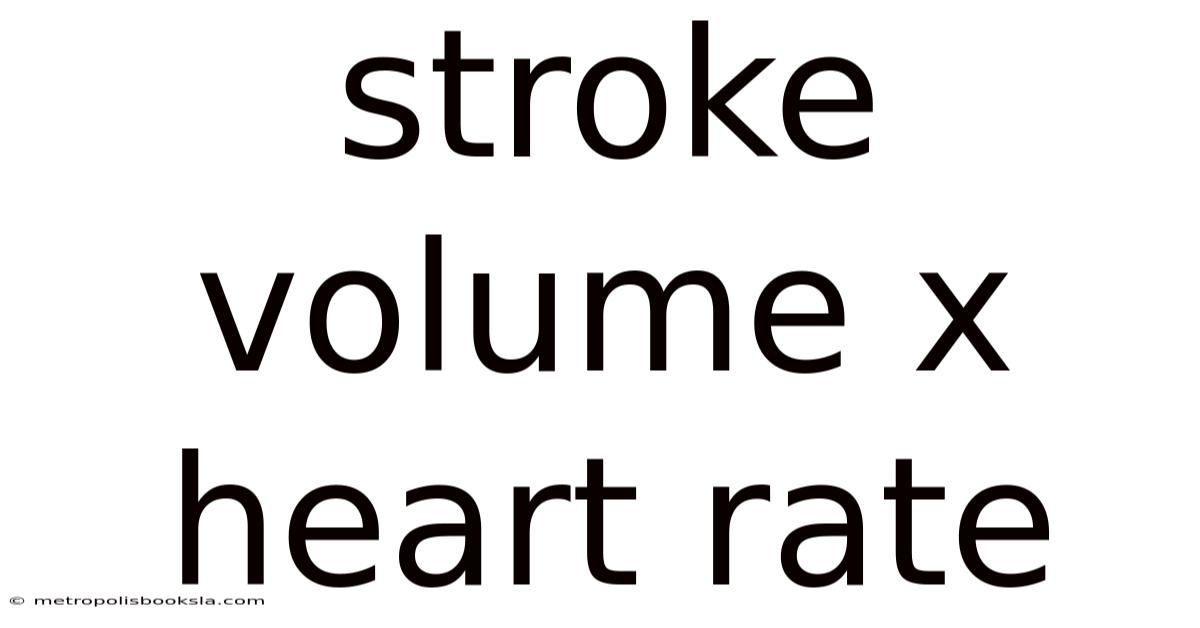
Understanding the Cardiac Output Equation: Stroke Volume x Heart Rate
Cardiac output, a fundamental measure of cardiovascular health, represents the volume of blood pumped by the heart per minute. Also, this seemingly simple concept is actually a complex interplay of two crucial factors: stroke volume (SV) and heart rate (HR). Because of that, understanding the relationship between stroke volume and heart rate is key to comprehending overall cardiovascular function, identifying potential health issues, and optimizing athletic performance. In practice, this article delves deep into the mechanics of stroke volume and heart rate, their individual determinants, and how their interaction shapes cardiac output. We'll also explore the implications of imbalances in this crucial equation.
What is Stroke Volume?
Stroke volume (SV) is the amount of blood ejected from the left ventricle (the heart's main pumping chamber) with each contraction. Also, it's measured in milliliters (ml) or liters (L) per beat. So a healthy individual typically has a stroke volume of around 70ml per beat, but this can vary significantly depending on several factors we'll explore later. Think of stroke volume as the strength of each heartbeat. A higher stroke volume indicates a more forceful and efficient contraction of the heart muscle.
Factors Affecting Stroke Volume:
Several physiological mechanisms influence the volume of blood ejected with each heartbeat. These can be broadly categorized as:
-
Preload: This refers to the end-diastolic volume (EDV), or the amount of blood in the ventricles just before contraction. A higher EDV stretches the cardiac muscle fibers, leading to a more forceful contraction (Frank-Starling Law). Factors influencing preload include venous return (blood returning to the heart), blood volume, and the filling time of the ventricles Worth knowing..
-
Afterload: This represents the resistance the left ventricle must overcome to eject blood into the aorta. Higher afterload, often due to high blood pressure or vasoconstriction (narrowing of blood vessels), reduces stroke volume. The heart has to work harder against increased resistance Not complicated — just consistent..
-
Contractility: This describes the inherent ability of the heart muscle to contract. Factors influencing contractility include:
- Hormonal influence: Hormones like adrenaline (epinephrine) and noradrenaline (norepinephrine) increase contractility, strengthening the heart's contractions.
- Calcium ions: The availability of calcium ions within the heart muscle cells is crucial for muscle contraction.
- Autonomic nervous system: The sympathetic nervous system increases contractility, while the parasympathetic nervous system generally decreases it.
- Medication: Certain medications, such as digoxin, positively influence contractility.
What is Heart Rate?
Heart rate (HR) is simply the number of times the heart beats per minute (bpm). Think about it: it's a measure of the frequency of heartbeats. In practice, a resting heart rate typically ranges from 60 to 100 bpm, although highly trained athletes may exhibit significantly lower resting heart rates (bradycardia). Conversely, a heart rate exceeding 100 bpm (tachycardia) might indicate stress, anxiety, or underlying medical conditions.
Factors Affecting Heart Rate:
Heart rate regulation is a complex process involving several interconnected systems:
-
Autonomic Nervous System: The sympathetic nervous system increases heart rate, while the parasympathetic nervous system slows it down. This is the primary mechanism for short-term heart rate regulation Practical, not theoretical..
-
Hormones: Epinephrine and norepinephrine from the adrenal medulla increase heart rate, while other hormones can have less direct but significant influences.
-
Electrolyte balance: Imbalances in electrolytes like potassium and calcium can significantly impact heart rate.
-
Body temperature: Heart rate generally increases with rising body temperature.
-
Age: Heart rate tends to be higher in children and decreases with age.
-
Physical activity: Exercise significantly increases heart rate Easy to understand, harder to ignore..
-
Medications: Some medications specifically target heart rate, increasing or decreasing it depending on their purpose Easy to understand, harder to ignore. Less friction, more output..
The Cardiac Output Equation: Stroke Volume x Heart Rate
Cardiac output (CO) is calculated as the product of stroke volume (SV) and heart rate (HR):
CO = SV x HR
This simple equation highlights the crucial interplay between these two factors. Which means similarly, an increase in stroke volume, with a constant heart rate, will also increase cardiac output. A change in either SV or HR directly affects cardiac output. To give you an idea, if heart rate increases, so does cardiac output, assuming stroke volume remains constant. This highlights the body's ability to adjust cardiac output to meet changing metabolic demands.
Implications of Imbalances in Stroke Volume and Heart Rate
Maintaining a balance between stroke volume and heart rate is crucial for optimal cardiovascular health. Imbalances can lead to various problems:
-
High Heart Rate, Low Stroke Volume: This scenario, often seen in conditions like heart failure or severe dehydration, can indicate a weakened heart struggling to pump sufficient blood. The heart compensates by beating faster, but each beat is less effective. The overall cardiac output may still be inadequate to meet the body's needs.
-
Low Heart Rate, Low Stroke Volume: This combination can signal serious underlying health problems like heart block or hypothyroidism. The heart's contractions are weak and infrequent, resulting in significantly reduced cardiac output Most people skip this — try not to..
-
High Heart Rate, High Stroke Volume: This might occur during strenuous exercise. While a high cardiac output is necessary for meeting the increased metabolic demands of physical activity, excessively high heart rates can place undue strain on the heart over prolonged periods Worth knowing..
-
Low Heart Rate, High Stroke Volume: This is relatively uncommon and could potentially be observed in highly trained athletes at rest due to their increased cardiac efficiency. Their hearts are strong, requiring fewer beats to pump the same volume of blood Practical, not theoretical..
Optimizing Cardiac Output: Exercise and Training
Regular exercise makes a real difference in optimizing both stroke volume and heart rate. Endurance training, in particular, leads to several adaptations that enhance cardiac performance:
-
Increased Stroke Volume: Endurance training improves the heart's ability to fill with blood during diastole (relaxation phase), increasing preload and thus stroke volume. It also strengthens the heart muscle, improving contractility Less friction, more output..
-
Decreased Resting Heart Rate: Through adaptations in the autonomic nervous system, regular exercise reduces the resting heart rate. The heart becomes more efficient at pumping blood, needing fewer contractions to achieve the same cardiac output Small thing, real impact. That's the whole idea..
-
Improved Cardiac Output: The combined effect of increased stroke volume and decreased resting heart rate translates to a significantly improved maximal cardiac output, enhancing the body's ability to deliver oxygen and nutrients to working muscles Simple, but easy to overlook..
Clinical Significance: Monitoring Stroke Volume and Heart Rate
Clinicians use various methods to assess stroke volume and heart rate to diagnose and manage cardiovascular conditions:
-
Echocardiography: Provides a detailed visual representation of the heart's structure and function, allowing for accurate measurement of stroke volume.
-
Electrocardiogram (ECG): Measures the electrical activity of the heart, providing information about heart rate and rhythm.
-
Blood pressure measurement: While not a direct measure of stroke volume, blood pressure is an indirect indicator of afterload and overall cardiac function And it works..
-
Cardiac Catheterization: A more invasive procedure used to directly measure cardiac output and assess the pressure within the heart chambers.
Frequently Asked Questions (FAQ)
Q: Can I calculate my own cardiac output?
A: While you can calculate your heart rate easily using a pulse check or fitness tracker, directly measuring stroke volume requires specialized medical equipment. So, calculating your exact cardiac output is not feasible at home. On the flip side, fitness trackers and smartwatches can provide estimations based on various physiological data.
Q: Is a higher cardiac output always better?
A: No. But while a sufficient cardiac output is essential for good health, an excessively high cardiac output can put strain on the heart. The optimal cardiac output depends on individual factors like age, fitness level, and health status.
Q: What are the symptoms of low cardiac output?
A: Symptoms of low cardiac output can range from mild fatigue and shortness of breath to more severe conditions like chest pain and fainting. Consult a doctor if you experience such symptoms Which is the point..
Q: Can diet affect stroke volume and heart rate?
A: Yes, a balanced diet rich in fruits, vegetables, and whole grains, low in saturated and trans fats, sodium, and processed foods, supports cardiovascular health. A healthy diet helps maintain optimal blood pressure, reducing afterload, and contributing to improved stroke volume.
Q: Can stress affect stroke volume and heart rate?
A: Yes, stress activates the sympathetic nervous system, leading to increased heart rate and potentially impacting stroke volume. Chronic stress can have long-term negative effects on cardiovascular health.
Conclusion
The relationship between stroke volume and heart rate is central to understanding cardiac output and overall cardiovascular health. Regular monitoring of these parameters, in consultation with healthcare professionals, is critical for maintaining cardiovascular well-being and addressing any potential imbalances. While heart rate represents the frequency of heartbeats, stroke volume reflects the efficiency of each contraction. Remember, consulting a healthcare professional for any concerns regarding your heart health is crucial. Here's the thing — understanding the factors that influence both SV and HR allows for better assessment of cardiovascular function, identification of potential health risks, and development of strategies for optimizing cardiac performance through lifestyle changes and exercise training. This article provides information for educational purposes and should not be considered medical advice.
